What is an electrical feeder?
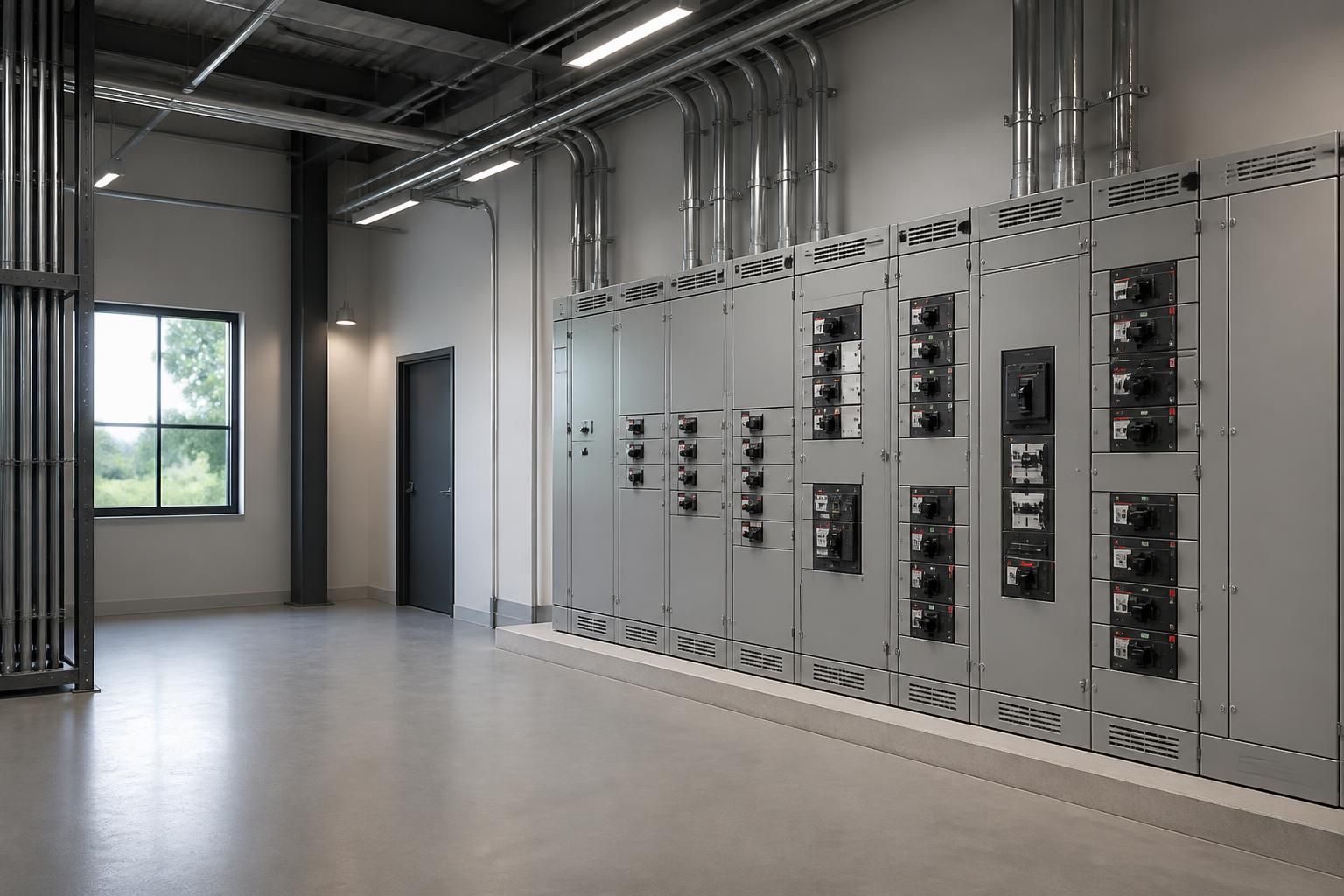
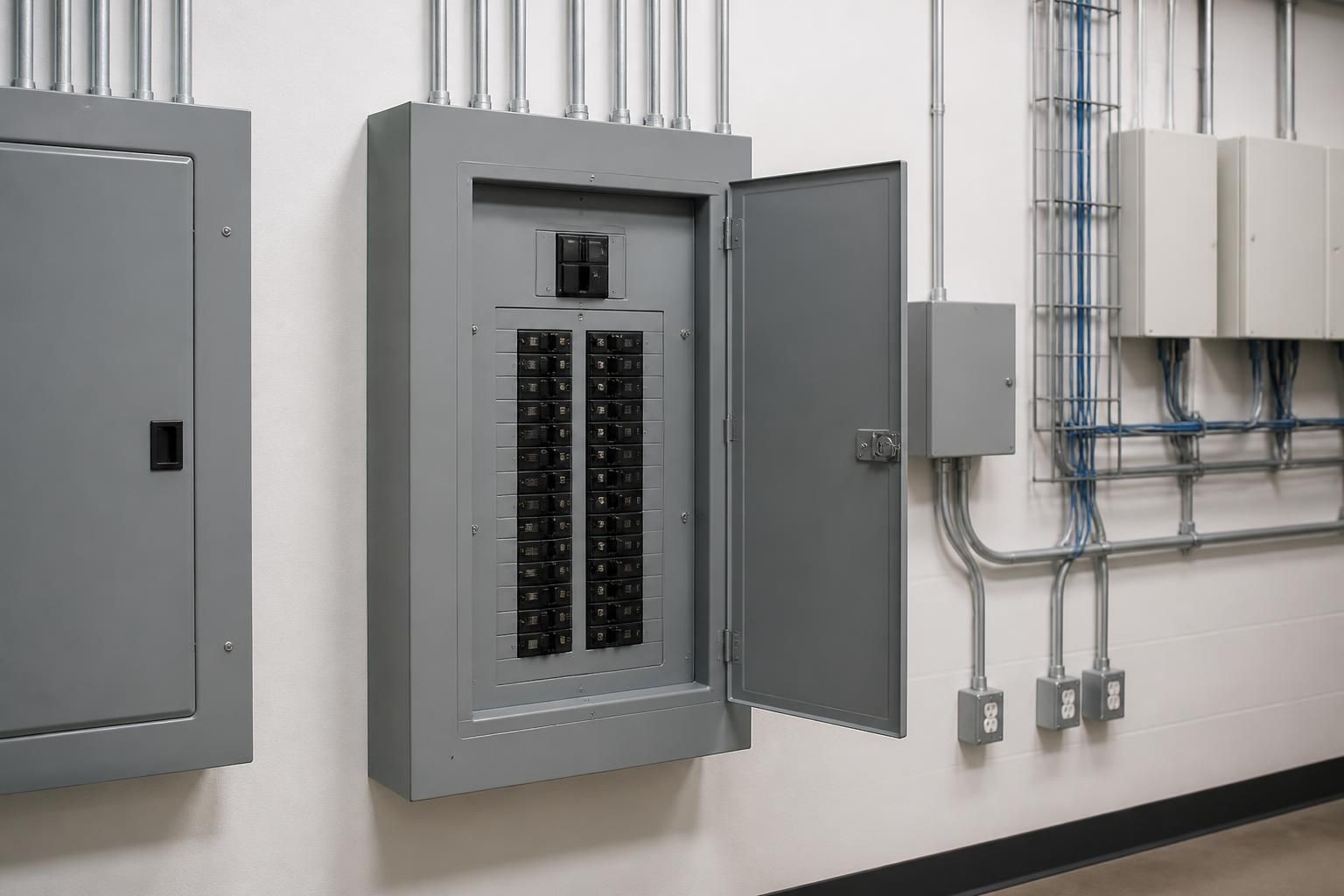
A feeder is the set of conductors that carries power from the service or a main switchboard to a panel, subpanel or large piece of equipment downstream. Branch circuits start after the last breaker. Feeders come before it, so every circuit on the panel depends on the feeder behind it.
When do you need a new feeder?
- A new tenant space needs its own panel
- A building addition or new wing
- Equipment has moved far from the existing panel
- An existing feeder is undersized, damaged or overloaded by added equipment
- A new subpanel is needed to give a growing operation room to expand
How is a feeder sized?
We start from the load, either calculated or measured. Then we check ampacity, the temperature the conductors will see, the conductor material, the raceway fill and voltage drop. The NEC informational notes suggest keeping voltage drop to about 3 percent on a feeder and 5 percent across the feeder and branch circuit together. Long runs on a campus or in a large warehouse often need a bigger conductor than ampacity alone calls for. Hot locations, such as rooftops and attic spaces, can call for a larger conductor too.
If you are not sure what the load really is, a load study gives the number before you spend money on conductors.
What does a feeder installation include?
- Route planning, including trenching or overhead runs where the building calls for them
- Conduit or other raceway, pull boxes and supports
- Wire pulling and terminations made to the manufacturer's specification
- Disconnects, panels or switchboards at either end
- Insulation resistance testing on larger feeders, labeling and inspection
Copper or aluminum?
Both are used. Large feeder conductors in aluminum are standard practice when the lugs are rated for it and the terminations are made correctly. That is a different situation from the small aluminum branch-circuit wiring found in some older buildings, which is covered on our aluminum wire and repair page.
This work is part of our Commercial Electrical Services.
Arizona ROC #153656 (CR-11) | Over 40 years in business