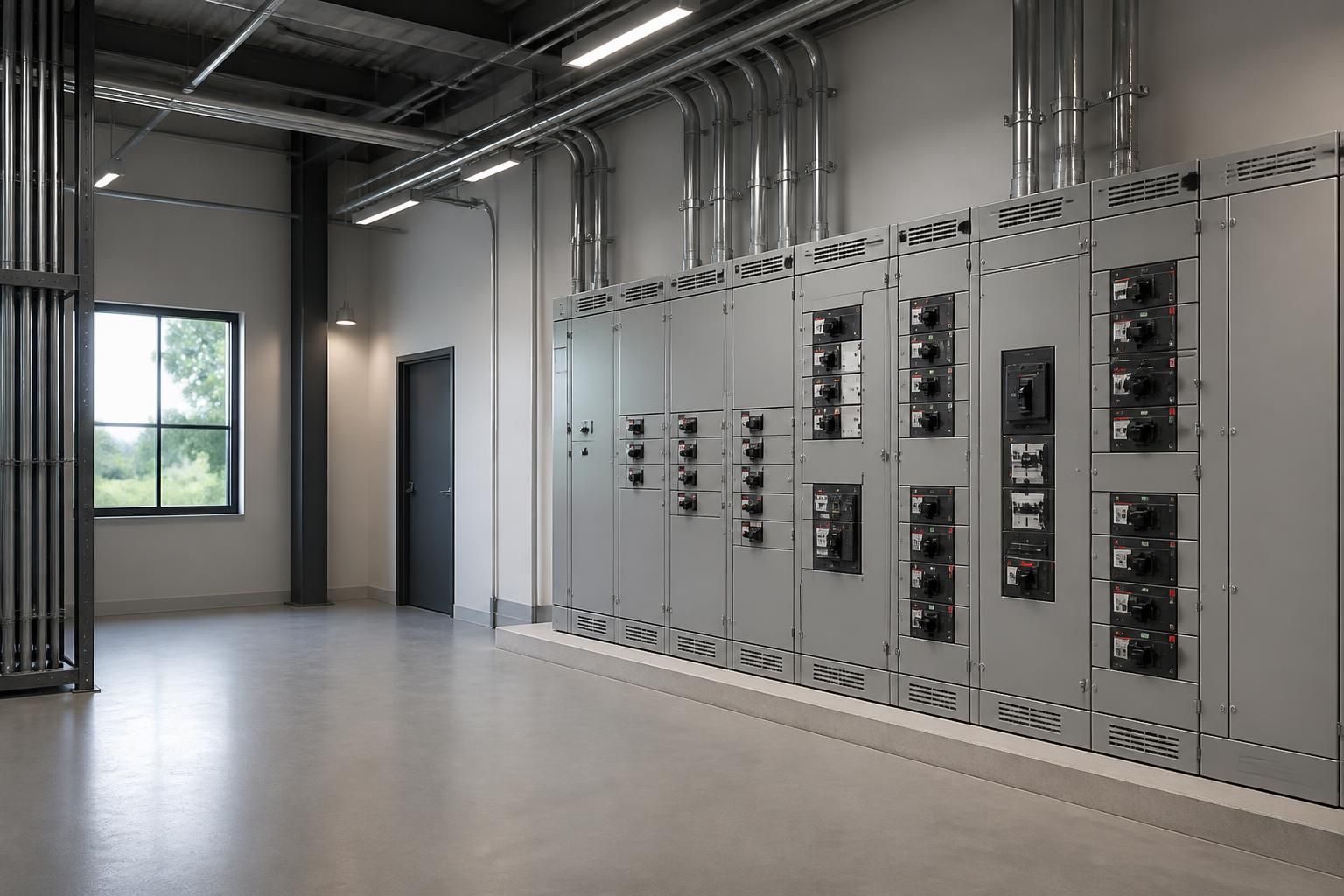
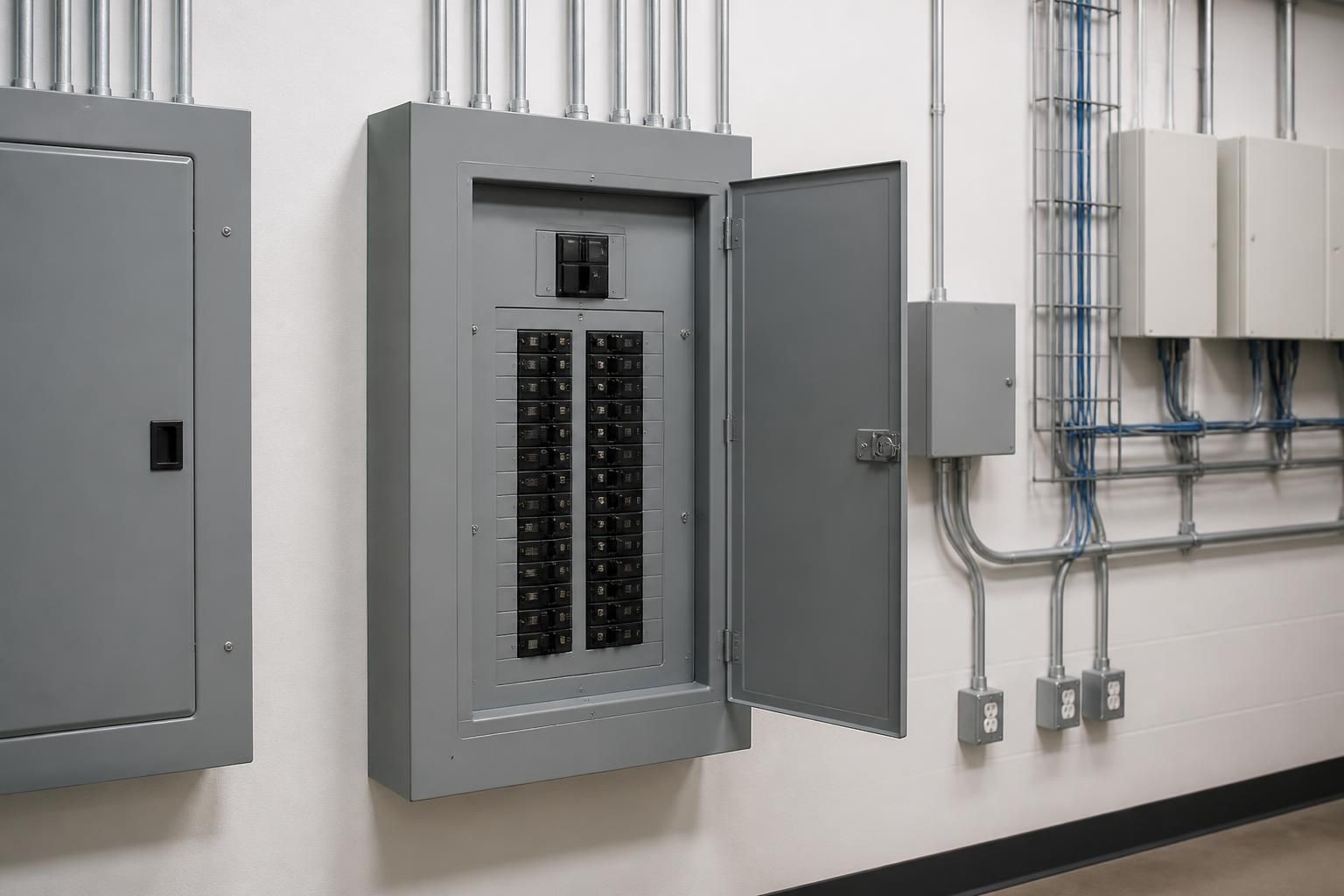
What does a transformer installation include?
A transformer installation is more than setting the unit. We size it, protect it, ground it and give it room to breathe. Most commercial jobs use a dry-type transformer to step a building's 480 volt supply down to 208Y/120 volts for outlets, lighting and smaller equipment.
- Sizing in kVA from the load the transformer will serve
- Overcurrent protection and disconnects on the primary and secondary side, as NEC Article 450 requires
- Mounting on the floor, wall or a trapeze, with the required clearances
- Primary and secondary conductors sized for the load
- Grounding and bonding of the secondary, which creates a separately derived system (see bonding and grounding)
- Testing, energizing and labeling
How do you size a transformer?
Start with the connected load, apply the demand and continuous-load rules, and leave room for what you plan to add. An undersized transformer runs hot and wears out early. A badly oversized one costs more and can run less efficiently. Measured data from a load study takes the guessing out of the number.
Why does Phoenix heat matter for a transformer?
Transformers shed heat into the room around them. Put one in a closed mechanical room, an attic or a sun-baked wall in July and the surrounding air is already well over 100 degrees before the unit does any work. We plan the location, clearance and ventilation with that in mind. After installation, infrared thermography can confirm the connections and the unit are running at normal temperature.
When do you need a K-rated transformer?
Loads built from electronics, such as LED drivers, variable frequency drives and computers, create harmonic currents that heat a standard transformer more than its nameplate suggests. A K-rated unit is built to handle that. Power monitoring can measure the harmonic content before you choose.
What about utility transformers?
Pad-mounted and pole-mounted transformers on the utility side belong to APS or SRP. We handle the customer side: dry-type units inside your building, the protection and conductors around them, and coordination when the utility's equipment is involved.
This work is part of our Commercial Electrical Services.
Arizona ROC #153656 (CR-11) | Over 40 years in business